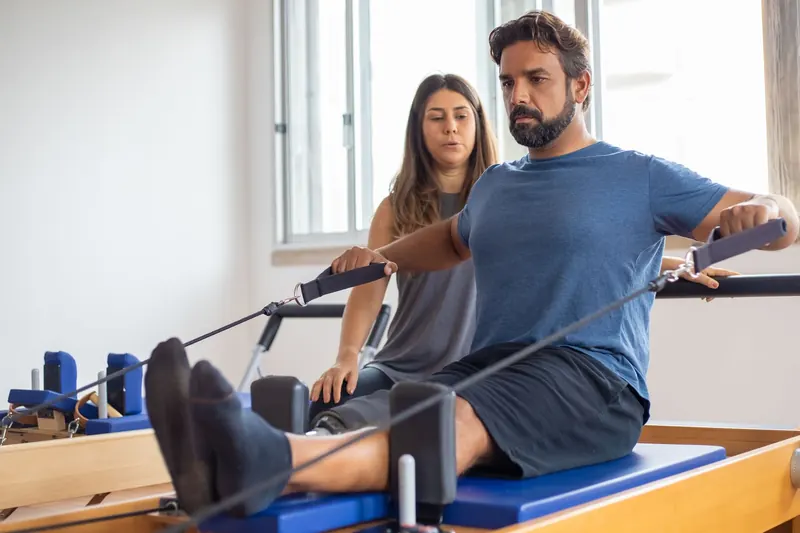
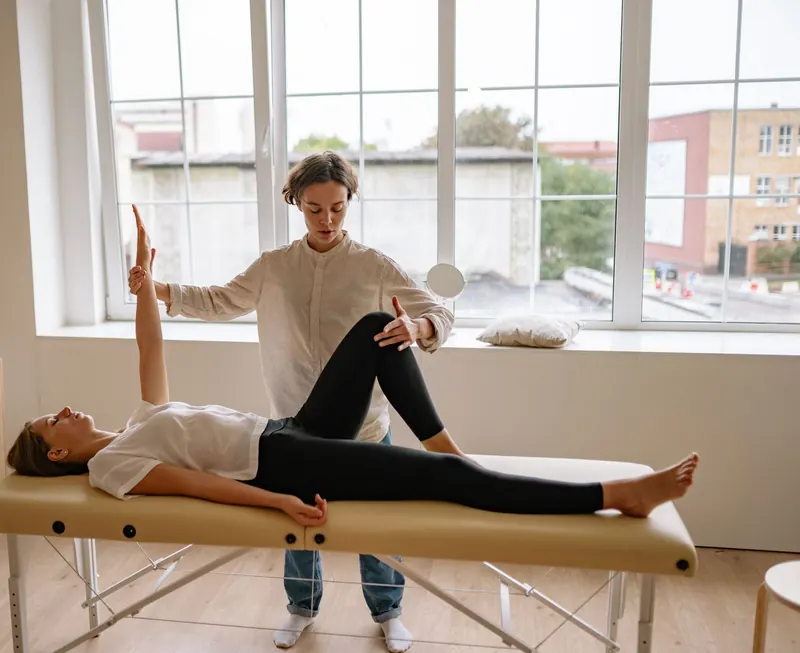
One-on-one physical therapy with a Doctor of Physical Therapy at every visit. We find what is driving your pain, show you how your joints actually move, and build a plan that fits your week.
Low back painSciatica-type symptomsNeck stiffnessHeadaches from the neckRunner’s kneeACL rehabRotator cuffFrozen shoulderAnkle sprainsSki-season prepPost-surgical recoveryDesk postureLow back painSciatica-type symptomsNeck stiffnessHeadaches from the neckRunner’s kneeACL rehabRotator cuffFrozen shoulderAnkle sprainsSki-season prepPost-surgical recoveryDesk posture
What we treat
Five places pain likes to settle.
Pick an area to see how it moves. The model turns to the joint, lights up the structures involved and traces a reference range of motion. Drag the slider in each card to move it yourself.
Stiffness after a long drive, the twinge when you lift the laundry basket, pain that travels into the leg. We look at how your hips, trunk and breathing share the load, then rebuild your tolerance for bending and lifting one step at a time.
Low back pain
Sciatica-type symptoms
Disc irritation
Postpartum back pain
Typical plan6–8 visits over 5 weeks
02 / 05 Cervical spine, C1–C7
Neck & upper back
Tech neck, headaches that start at the base of the skull, the shoulder check you dread while merging. We pair gentle manual therapy with strength work for the deep neck and upper-back muscles that hold your head up all day.
Desk and screen strain
Neck-related headaches
Whiplash recovery
Stiffness on waking
Typical plan4–6 visits over 4 weeks
03 / 05 Tibiofemoral joint & menisci
Knee
Runner’s knee, meniscus irritation, ACL rehab before and after surgery, and stairs that feel taller than they used to. We test strength side to side, watch how you squat and land, then load the knee progressively until it trusts you again.
Kneecap pain
ACL and meniscus rehab
Knee osteoarthritis
After knee replacement
Typical plan8–12 visits over 6–10 weeks
04 / 05 Glenohumeral joint & rotator cuff
Shoulder
The reach to the top shelf, a stiff shoulder that wakes you at night, a rotator cuff repair you want to get right. We restore motion first, then build the cuff and shoulder-blade strength that keeps it there.
Flexion180°
Abduction180°
External rotation90°
Internal rotation70°
Rotator cuff pain
Frozen shoulder
Post-op repairs
Overhead sport pain
Typical plan8–10 visits over 8 weeks
05 / 05 The whole kinetic chain
Sports injuries
Ankle sprains on the trail, hamstring strains mid-season, a ski-day knee. We rehab the injury, then retest you with real numbers for strength, hop distance and change of direction before you go back.
90%strength vs. your other side before return
3hop tests in our return battery
6 wktypical first retest
Ankle sprains
Hamstring strains
Tendon pain
Return-to-sport testing
Typical planVaries by injury and season
Your first visit
Sixty minutes, one-on-one, never rushed.
Most first visits follow the same calm rhythm. You can pause, ask questions or skip anything at any point.
00–10 minStep 01
Your story
What hurts, when it started, what you want back. We ask about sleep, work and training too, because they all change how tissues recover.
10–25 minStep 02
Movement screen
We watch you squat, reach, turn, balance and walk, and measure how far each joint moves. Nothing you can’t stop at any time.
25–40 minStep 03
Hands-on assessment
Joint mobility, strength testing, nerve-tension checks and palpation, explained in plain language as we go.
40–50 minStep 04
First treatment
Usually a mix of manual therapy and two or three movements you will leave knowing how to do well.
50–60 minStep 05
Your plan
A written plan with goals, visit frequency and a home program on your phone the same day.
What to bring
Photo ID and insurance card
Imaging or surgical notes, if you have them
Shorts or leggings and a T-shirt
A list of current medications
Programs & session lengths
Programs sized to your week.
Every program starts with an evaluation. From there your plan mixes the formats below, and session lengths are fixed so you can plan around them.
45minMost booked
Recovery Care
For new pain, flare-ups and long-running niggles. Manual therapy, graded exercise and a home program that fits into ten minutes a day.
Live model
Return-to-sport stride check
60min1:1
Return to Sport
Strength testing, hop tests and sport-specific drills before you go back to the trail, court or slope.
45min1:1
Post-Surgical Rehab
ACL, meniscus, rotator cuff, spine and joint replacement, in step with your surgeon’s protocol.
30min1:1
Desk Body Tune-Up
A quick check of neck, back and wrists for people who sit for a living, with a workstation photo review.
50minMax 3 people
Reformer Strength
Clinical Pilates on the reformer for spines and hips that need controlled, progressive load.
25minVideo
Telehealth Check-In
Progress your home program between visits, or keep your plan moving while you travel.
Session lengths
25 min
30 min
45 min
50 min
60 min
The team, by role
Clinicians first. Every visit, one-on-one.
We never double-book. The Doctor of Physical Therapy who evaluates you leads your plan from the first visit to the last, with a small team around them.
1:1every visit, never double-booked
4private daylight treatment rooms
1 dayto verify your benefits
Leads every plan
Doctor of Physical Therapy
Runs every evaluation and plan of care. Board-certified orthopedic and sports clinical specialists on staff.
Return to sport
Sports Clinical Specialist
Runs return-to-sport testing and works with runners, climbers, skiers and court athletes.
Private room
Pelvic Health PT
Pregnancy, postpartum and pelvic floor care in a private room, at a pace that suits you.
Exercise sessions
Physical Therapist Assistant
Guides your exercise progressions between DPT visits, always under your plan of care.
After discharge
Strength & Conditioning Coach
Bridges the gap from discharge to your next season with supervised strength blocks.
Front desk
Patient Care Coordinator
Checks your benefits, finds times that work and answers the phone with a real voice.
Treatment rooms with daylight, not curtains.Four private rooms, a small strength floor and space to walk, run and land while we watch.
Insurance & pricing
Clear costs before your first visit.
We check your benefits within one business day and send your estimated cost in writing. Figures here are concept pricing for a fictional clinic.
HSA & FSA cards accepted24-hour cancellation windowSuperbills on request
Most major PPO plans
Copay or coinsurance per your plan
In-network
Medicare Part B
Plan of care signed by your physician
Accepted
HMO and EPO plans
We confirm referral rules for you
Referral may be needed
Auto and workers’ comp
Claim number and adjuster details
Case by case
Out-of-network plans
Pay at the visit, claim it back
Superbill
Your estimate arrives in writing before visit one, so the first bill holds no surprises.
Evaluation
60 min, one-on-one with a DPT
$165
Follow-up visit
45 min, one-on-one
$125
Check-in
30 min, progress and program update
$85
Telehealth
25 min, video
$70
Reformer Strength
50 min, small group of up to 3
$45per person
Six-visit pack
Six 45-minute follow-ups
$690$115 per visit
Concept prices for a fictional clinic, shown in US dollars.
Home exercise library
Your program, on the model first.
Every plan comes with a home program on your phone: short videos, timers and a weekly check-in. Tap an example below to watch the model run through it.
A band, a wall and ten minutes. That is the usual kit.
Examples only, not medical advice. Do exercises only as your physical therapist prescribes, and stop if pain increases.
Questions
Good to know before you book.
Still unsure? Leave a note in the booking form and a coordinator would call you back.
Do I need a doctor’s referral?
Colorado allows direct access to physical therapy, so most people can book an evaluation without one. Some insurance plans and Medicare still ask for a referral or a physician’s sign-off on your plan, and we check this for you before your first visit.
What should I wear?
Something you can move in: shorts or leggings and a T-shirt or tank top. For shoulder or neck visits, a top that lets us see your shoulder blades helps.
How many visits will I need?
It depends on what is going on and what you want to get back to. Many plans run four to ten visits. We review progress against your goals every few sessions and taper as you get stronger.
Will it hurt?
Some exercises will feel like effort, and a few hands-on techniques can be uncomfortable for a moment. We work within a range you can tolerate, and you can stop anything at any time.
Can I bring my imaging and surgical notes?
Please do. MRI or X-ray reports, operative notes and your surgeon’s protocol all help us plan safely.
Is anything on this site medical advice?
No. Kinlark Physio is a concept website for a fictional clinic. The model, ranges and exercises are illustrations only. For pain, numbness or a recent injury, talk with a licensed clinician, and for an emergency call 911.
Book an evaluation
Start with one calm hour.
Tell us a little about what is going on and we will suggest a time. Evaluations usually open within the same week.
Studio hours
Denver, Colorado Step-free entrance · bike parking