Ignition
The engine lights in the flame trench, the hold-downs let go at full thrust and you clear the tower in four seconds. Your seat presses into your back at 1.7 G, firm and steady.
490 kNthrust at liftoff
 Orbitline
 Orbitline
Suborbital flights · Southern New Mexico
Eleven minutes from ignition to touchdown. Four of them weightless, 106 kilometers up, with the curve of the Earth filling a window that is yours alone.
Keep scrolling and you fly the whole profile: the countdown, the climb, four quiet minutes at the top and the ride home under orange canopies. The strip on screen is your seat’s telemetry, live.
Skip the flight ↓The engine lights in the flame trench, the hold-downs let go at full thrust and you clear the tower in four seconds. Your seat presses into your back at 1.7 G, firm and steady.
490 kNthrust at liftoff
Maximum aerodynamic pressure. The ride is loud for about twenty seconds, then smooths out as the air thins. You are already ten kilometers up, above where airliners fly.
Mach 1.4at 9.5 km
The engine shuts down at 55 km and the silence is the first thing everyone remembers. Seconds later, springs push Overlook clear and the booster heads home to land on its own pad.
3.4 Gpeak on the climb
Unbuckle. You have four minutes. Float to your window, turn upside down, let a drop of water hover in front of you. Your crew coach taps your shoulder when it is time to strap back in.
0.0 Gfor 4 min 05 s
Above the Kármán line the sky is black at breakfast time. The Rio Grande is a thread, the curve of the Earth is plain to see, and the atmosphere is a thin blue line beneath your feet.
70 sabove 100 km
Back in your seat, reclined. Overlook falls heat shield first and the air piles up against it. The load peaks near 5 G for a few seconds; day two in the centrifuge makes it feel familiar.
5.2 Gpeak · 3,900 km/h
Two drogues steady the fall at 9 km. At 2.6 km, three orange-and-white mains bloom overhead and the white basin comes back into focus below your window.
25 km/hfinal descent
A pulse from the landing thrusters cushions the last meter. The hatch opens to dry desert air, and your people are waiting at the recovery line.
11:00ignition to touchdown
02 / The capsule
Overlook is a pressurized, fully autonomous capsule designed around its windows. Each seat reclines toward its own 1.1-meter pane, so the view is never over someone’s shoulder.
Window height
Each pane is a pressure vessel on its own. The outer one is polished and inspected after every flight, so the view stays sharp.
Cabin volume
Room to tuck into a slow somersault without touching a wall.
Pilots on board
Fully autonomous. A flight director and fourteen controllers watch every second from the ground.
Landing zone
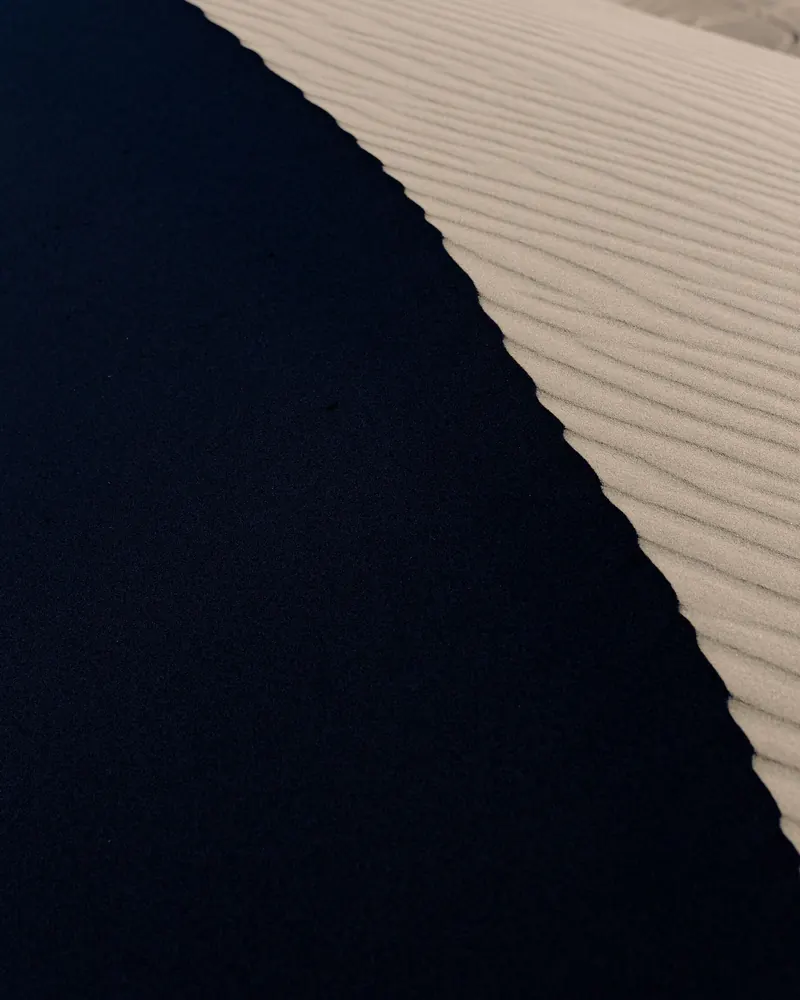
Overlook lands on gypsum sand as soft as flour, inside a ring our recovery crew can reach in four minutes.
Shirtsleeve cabin
Sea-level pressure and ordinary air. The flight suit is for comfort, not survival.
Escape system
At any moment on the climb it can pull Overlook clear of the booster and bring it down under the same three parachutes.
03 / Training
Training happens at our base camp in Las Cruces and on the pad itself. Groups of six train together and fly together, with one crew coach who rides along.
Day 1Ground
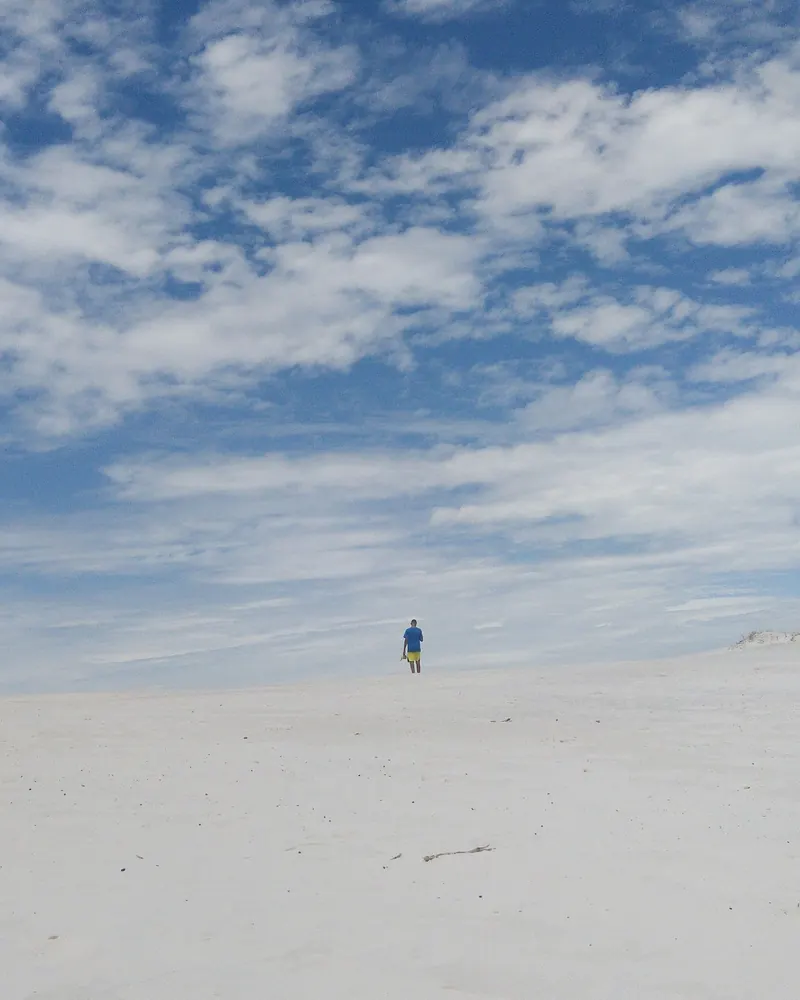
A medical review with our flight surgeon, a custom seat-liner fitting, the flight profile minute by minute, and a walk around the booster on Pad 2.
09:00–17:30 · base camp
Day 2Float & G
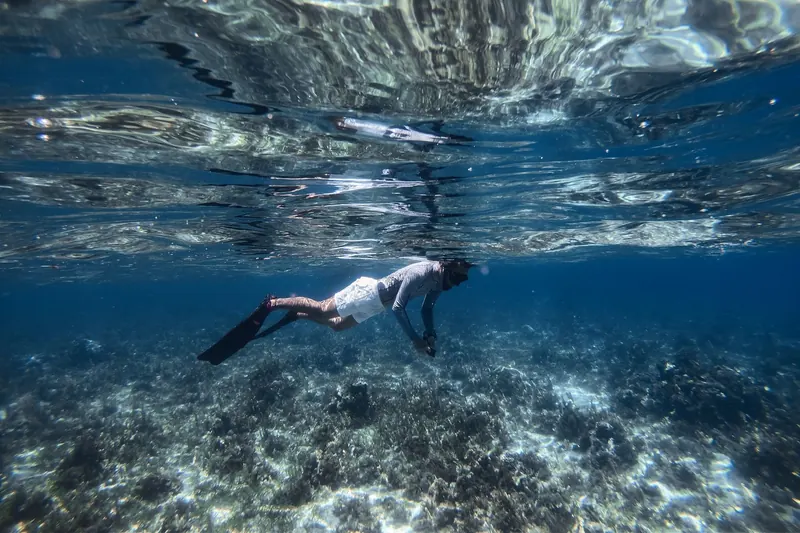
A morning in the pool for orientation drills: how to push off, turn and get back to your seat. In the afternoon, centrifuge runs up to 5.5 G so reentry feels familiar.
08:00–16:00 · pool and centrifuge
Day 3Rehearsal
Suit up, ride the tower elevator, strap in and run the full countdown to T−10 seconds with the crew you will fly with. Then an early night.
05:00–11:00 · Pad 2
04 / Who can fly
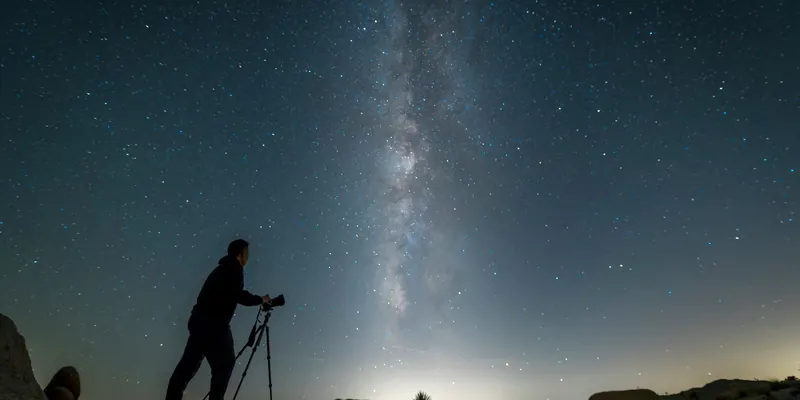
No astronaut background needed. We look for basic fitness, a clear medical review and the ability to follow a crew coach under load.
05 / Seats & pricing
Concept prices for this website. A 10% deposit holds a seat and is fully refundable until 90 days before your window.
Window seat
$248,000
per person
Full capsuleYour crew only
$1,380,000
for six seats
Ground pass
$650
per guest
Prices in USD · concept only · nothing on this page can be booked
06 / Launch calendar
We fly one Saturday a month at sunrise, when the air over the basin is calmest. Every window has a backup the following morning.
07 / Questions
Still wondering about something? Hold a seat and a crew coach walks you through it on a call before you pay anything more.
We fly only when winds, clouds and upper-level conditions are inside limits. If the morning is scrubbed we try the backup day; if that fails too, you choose the next open window at no cost.
No. If you can climb seven flights of stairs and pass the medical review, training covers the rest. Reentry at up to 5 G is the hardest minute, and day two prepares you for it.
Yes, in a tethered pouch; anything loose floats. Each seat also has two fixed cameras, and your footage is waiting for you by the time you land.
A flight suit we fit for you on day one, over your own soft clothes. Shoes go in a locker before you float, so bring warm socks.
No spaceflight is risk-free, and we walk you through every risk in writing. Overlook carries an escape motor that works from the pad to engine cutoff, three main parachutes where two are enough, and landing thrusters for the last meter.
Yes. Ground Passes put them on the watch deck 3 km from the pad with live telemetry on the big screen, and at the recovery line when your hatch opens.
No. Orbitline is a concept website by Doris Studio. The vehicle, flights, prices and dates are invented.
08 / Reserve
Hold a seat with a refundable deposit. We send the medical questionnaire and your training dates, and a crew coach calls to answer everything else.